Infection control
Every patient gets a fresh tray, bowl and scoop. There is no shared surface for pathogens to survive on, and no dependence on contact time or dilution being right every single time.
Veterinary equipment supplier · clinics and wards
Litter trays, feeding bowls and scoops are the most-handled veterinary equipment in any small-animal ward — and the hardest to reprocess properly. As a veterinary equipment supplier to clinics, VOLKOS simplifies disinfection in clinics by replacing the wash-rinse-dry cycle with a fresh, leak-free, biodegradable item for every patient, so nothing carries over between cages and no disinfectant residue touches the animal.
Why clinics switch
Every patient gets a fresh tray, bowl and scoop. There is no shared surface for pathogens to survive on, and no dependence on contact time or dilution being right every single time.
Disinfectants can irritate feline skin and airways, and rinsing is often the step that gets cut on a busy shift. Single-use fibre removes the chemistry from the patient zone entirely.
Washing trays and bowls is unskilled time spent by skilled staff. Disposal replaces the sink, freeing nursing hours for patient care instead of reprocessing.
The clinic range
Clinic packs for the ward, discharge sets that go home with the patient. Request pricing per product — no online ordering.
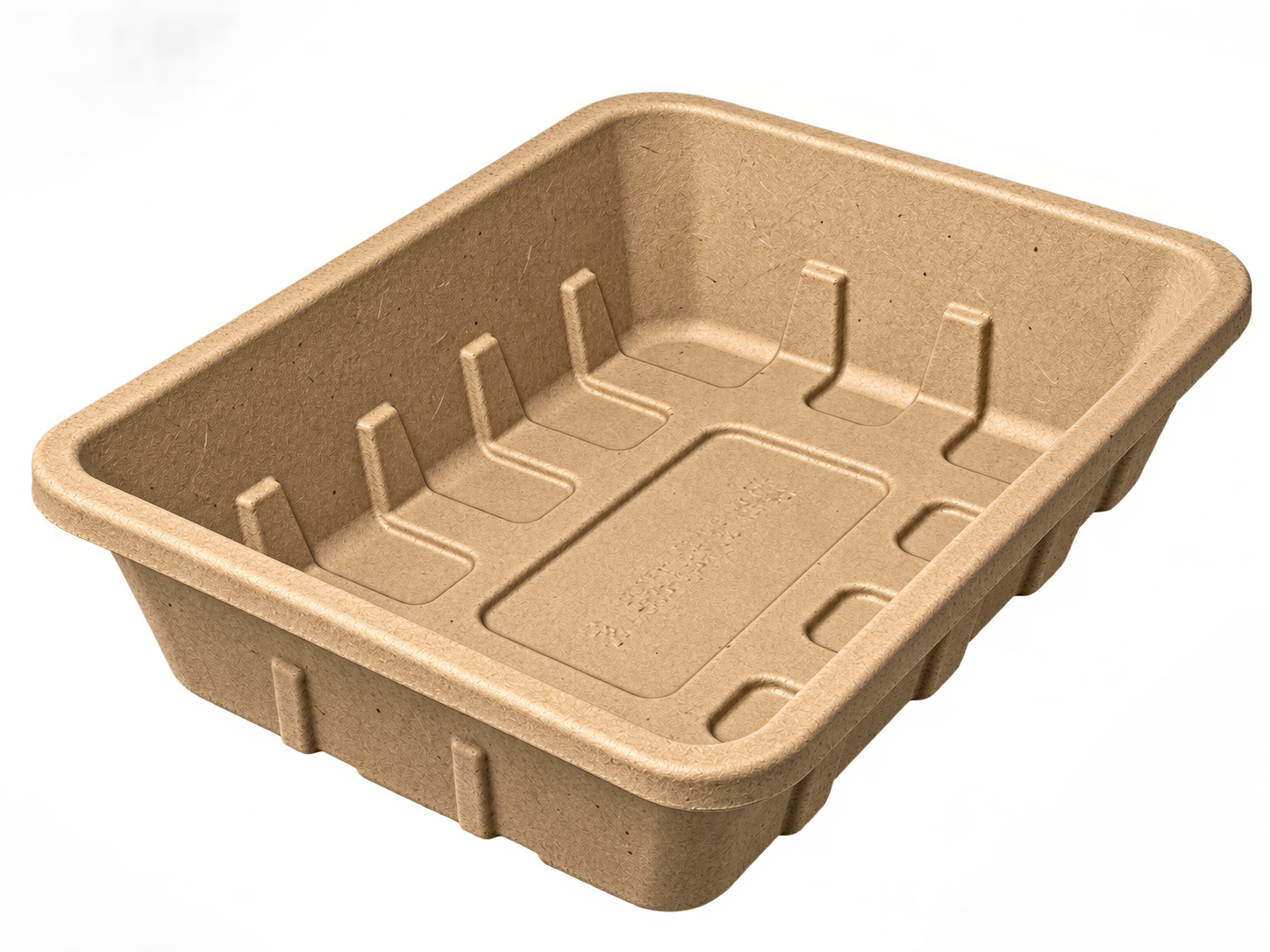
Size M · 30 pcs
40×30×9 cm (15.7×11.8×3.5 in)
Bulk clinic pack of 30 trays in size M. Nested for storage, a fresh tray for every patient, straight into the compliant waste route after use.
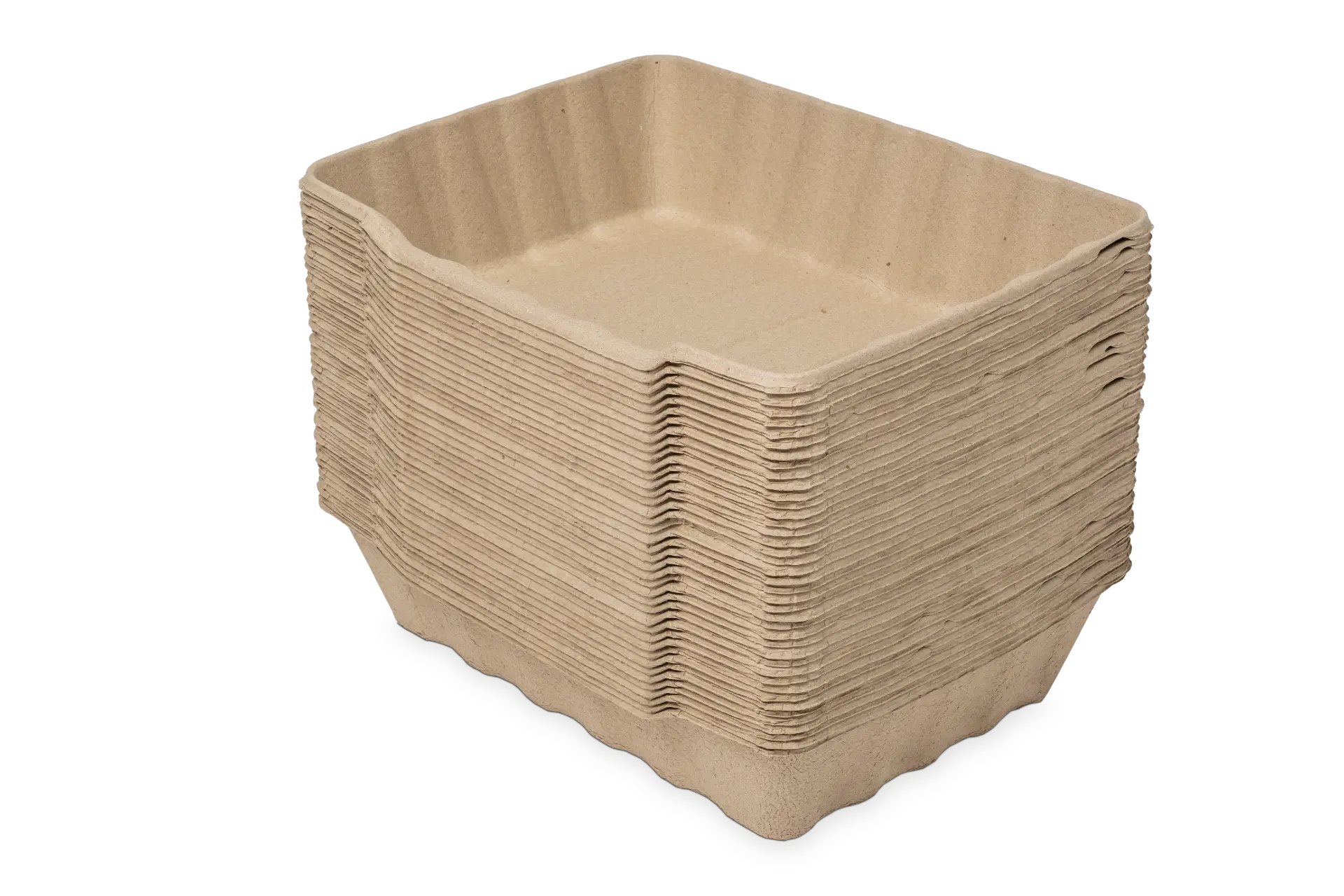
Size L · 30 pcs
45×35×11 cm (17.7×13.8×4.3 in)
Bulk clinic pack of 30 trays in size L. Nested for storage, a fresh tray for every patient, straight into the compliant waste route after use.
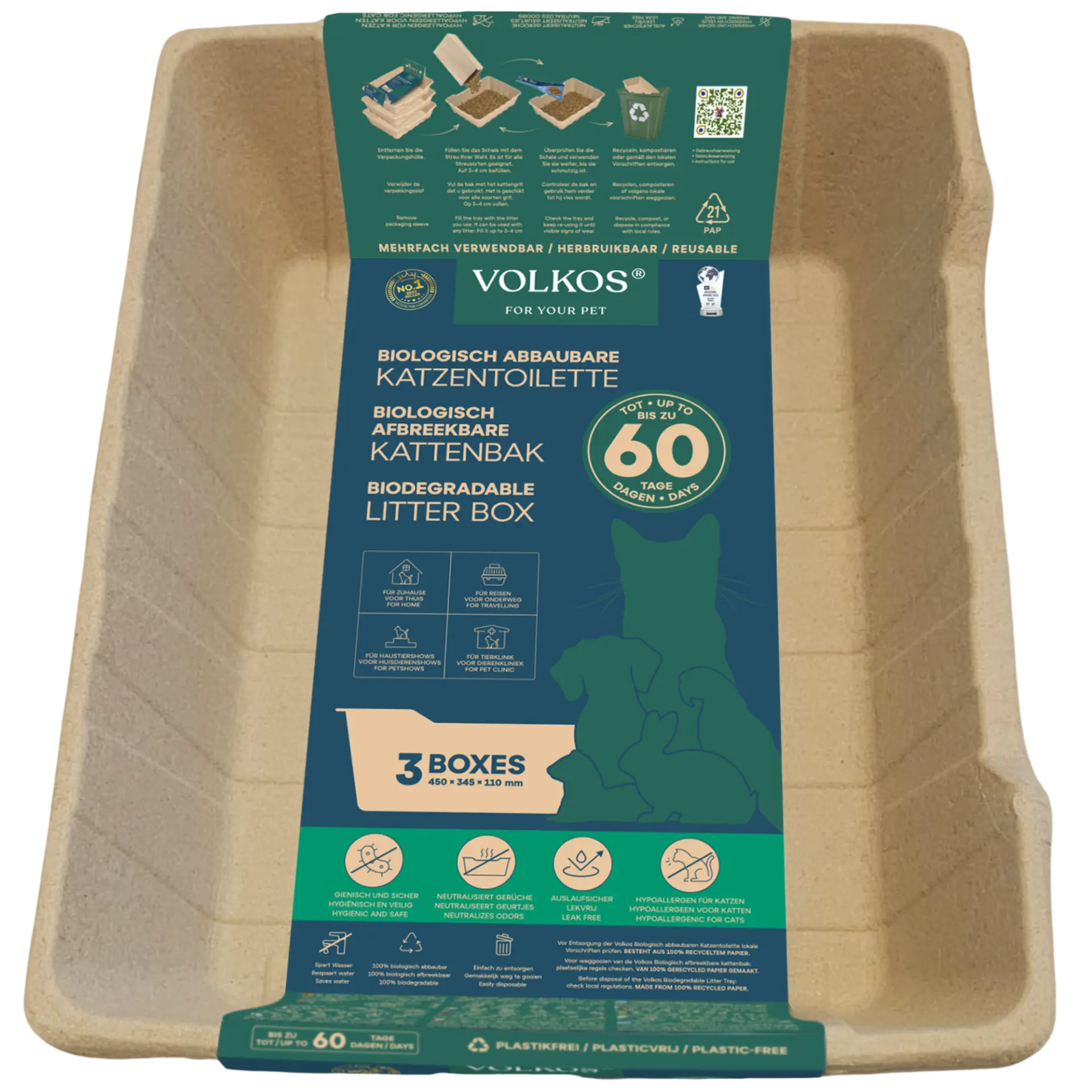
Size L · 3 pcs
45×34.5×11 cm (17.7×13.6×4.3 in)
Leak-free, single- or multi-use. Intraoperative waste containment and clean urine, fecal and fluid sample collection; a three-tray set to send home at discharge.
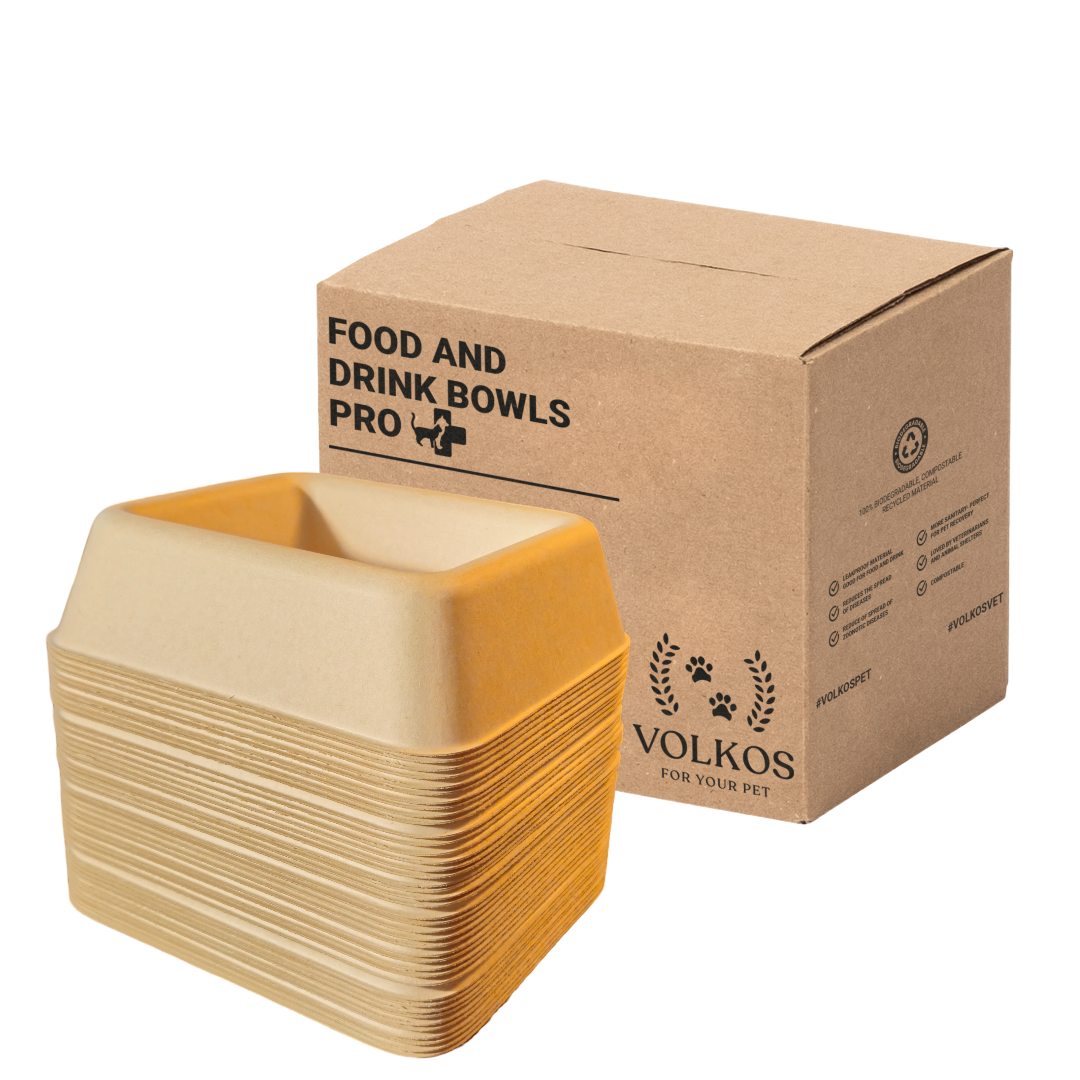
Size M · 50 pcs per box
M 15×18×5 cm · 430 ml
For wet food, dry food and water. Square design fits more per shelf, a no-flip base for recovery patients and wide sides that reduce whisker stress.
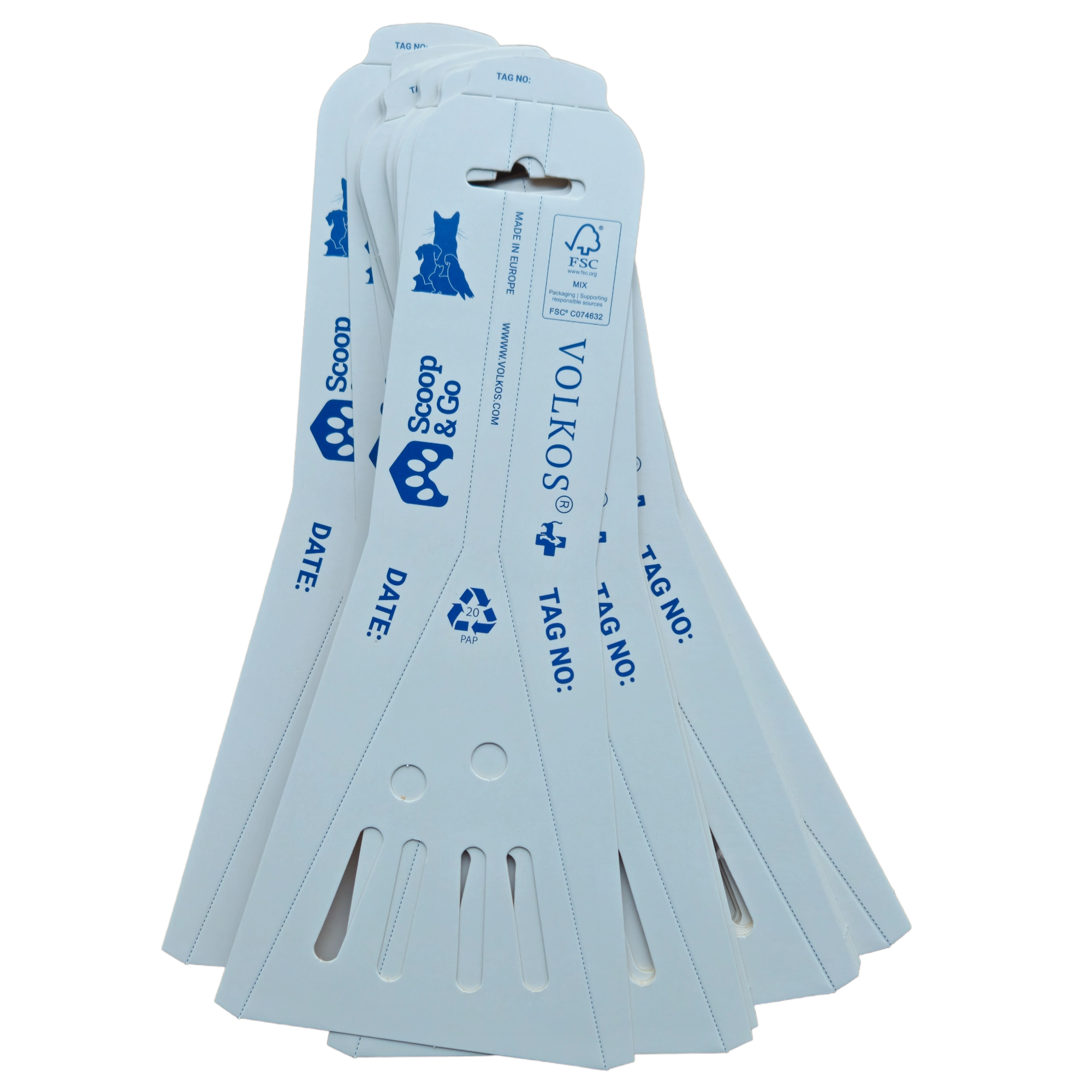
50 pcs per box
27×12 cm (10.6×4.7 in)
Biodegradable cardboard with an ergonomic grip. Disposed with the contaminated waste — nothing to clean or store.
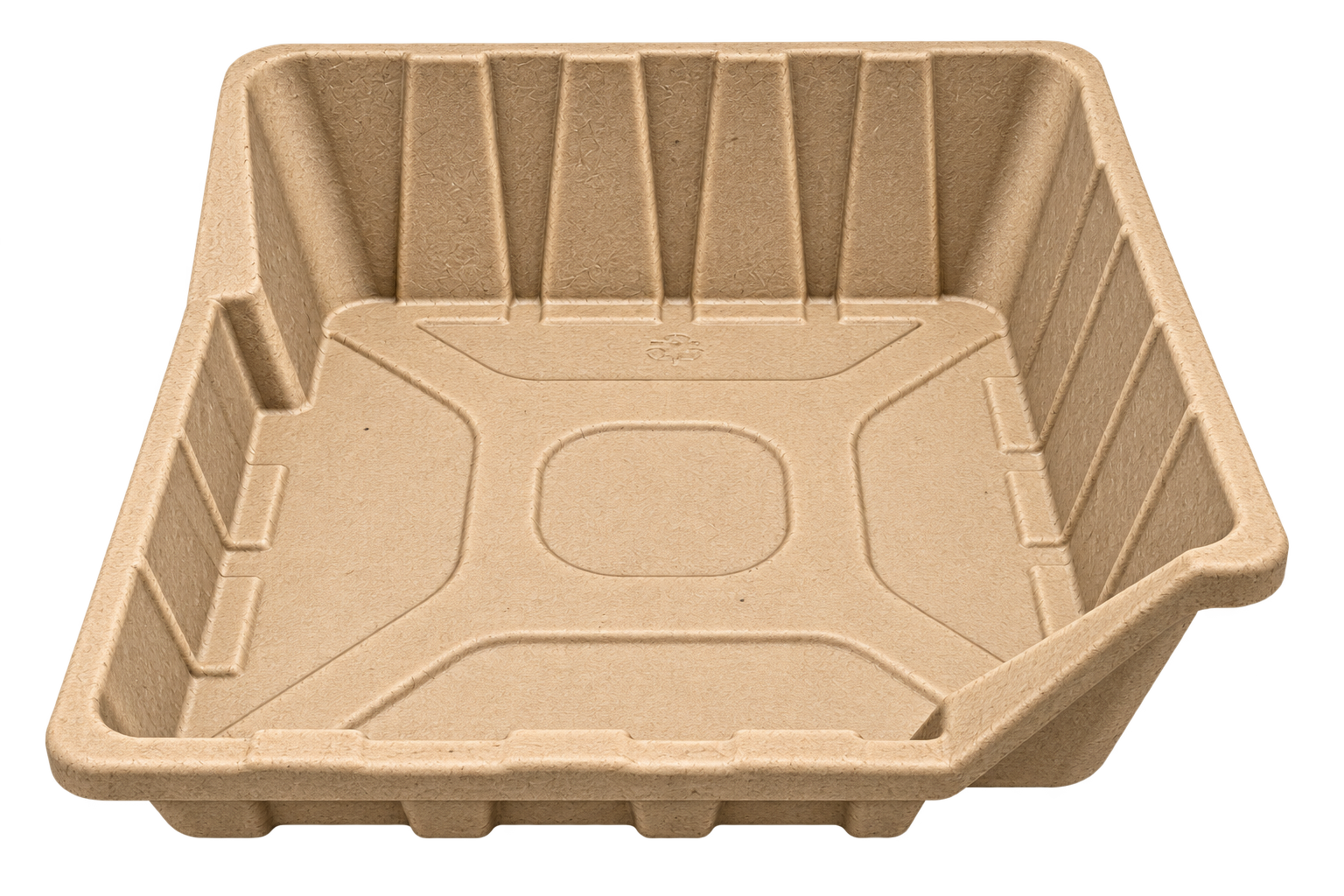
Size S, also M · L
30×30×10 cm (11.8×11.8×3.9 in)
Two open sides for a space-saving corner fit. Dust-free natural fibres protect sensitive, post-surgical and avian patients.
Clinical reading
Evidence-led articles our team publishes for veterinary professionals — equipment care, disinfection controls and bowl hygiene, and what ABCD, AAHA and published studies actually recommend.
University feedback points to a specialist use for everyday ward equipment. Explore how single-use trays and bowls can fit patient care during scintigraphy, without replacing contamination controls or authorised radioactive-waste handling.
Read the articleBiodegradable does not mean radiologically cleared. How veterinary hospitals can assess patient-contact consumables, waste segregation and authorised release after nuclear-medicine procedures.
Read the articleIsolation draws a line between contaminated and clean, and daily husbandry tests it dozens of times a day. Here is how clinics can route trays, bowls, bedding and scoops so nothing returns to another patient by accident.
Read the articleDisinfectant toxicity, the tray that never quite gets sterilised between patients, and the ward minutes spent scrubbing: the ABCD and AAHA guidance behind the litter-tray concerns vets raise most often — and where single-use fits.
Read the articleDoes your ward protocol cover the equipment, or only the cage? ABCD and AAHA guidance helps clinics define cleaning, disinfection and disposal procedures for patient-contact items.
Read the articleDisinfection depends on more than product choice. Reliable ward hygiene requires controlled dilution, sufficient wet contact time, soil removal and stable solutions—supported by measurement and selective use of single-use equipment.
Read the articleHousehold studies link bowl contamination to food type and cleaning practices. For veterinary wards, the findings inform reusable-bowl protocols and clarify which handling steps single-use bowls can remove.
Read the articleComparison and scale figures are modelled estimates, not a certified third-party LCA. Source: VOLKOS LCA Report, June 2026. Not yet third-party critically reviewed — independent verification recommended before external ESG or procurement use.
Professional enquiries
Volume pricing, pack and pallet options, lead times and samples for procurement teams.